A network switch connects devices within your office so they can talk to each other, while a router connects your office network to other networks, most importantly the internet. In a small business you need both, and in most setups they are separate boxes doing separate jobs: the router faces the outside world, the switch handles the traffic inside. Confusing the two is common, and it leads to buying the wrong hardware.
Key facts
- A switch connects devices inside one network (computers, printers, phones, access points) so they can communicate on the local network.
- A router connects different networks together, typically your local network to the internet, and directs traffic between them.
- Most small businesses need both, and they are usually separate devices, though some small all-in-one units combine router, switch, and Wi-Fi.
- A managed switch adds control (VLANs, monitoring, port configuration) that an unmanaged switch does not, which matters once you segment a network for security.
- Buying a bigger router will not fix slow internal file transfers, and adding switches will not improve your internet connection. They solve different problems.
What does a network switch do?
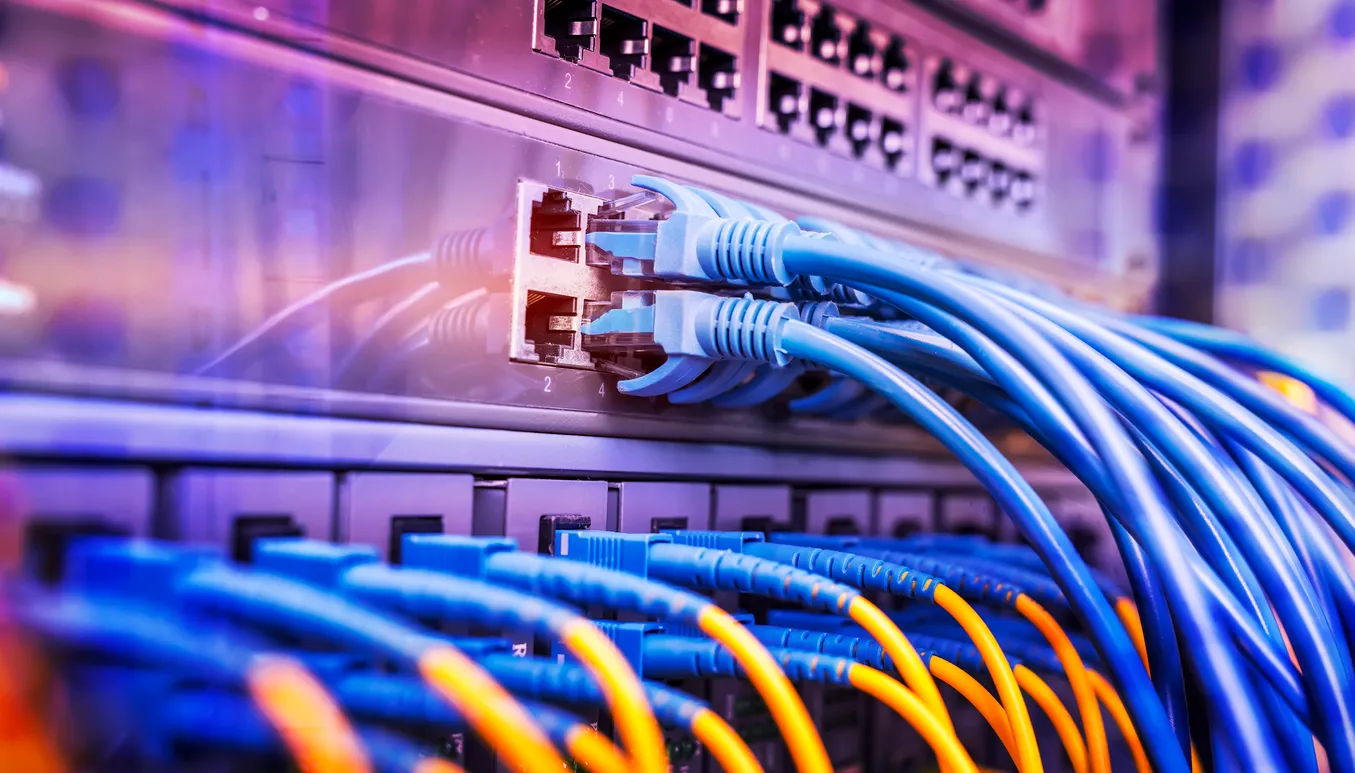
A switch is the device that lets everything inside your office network talk to everything else. Computers, printers, IP phones, Wi-Fi access points, and servers all plug into a switch, and it moves data between them intelligently, sending each packet only to the port where the destination device sits rather than broadcasting it everywhere. That is the difference between a switch and an old hub, and it is why switches are the backbone of any wired network. When you copy a file from your PC to a shared server in the same office, that traffic goes through the switch and never touches your router or the internet.
What does a router do?
A router connects your local network to other networks and decides where traffic goes between them. In a small business the main job is joining your internal network to the internet through your NBN or fibre connection, acting as the gateway that all outbound and inbound internet traffic passes through. The router is also where a lot of the security boundary sits: firewall rules, network address translation, and often the VPN for remote access all live at or near the router. If the switch is the internal road network, the router is the on-ramp to the motorway.
Do I need both a switch and a router?
In almost every business, yes. The router gets you onto the internet, but most routers only have a handful of network ports, often four or fewer, which runs out fast once you have a dozen devices. A switch expands that capacity, giving you the ports to plug in all your computers, printers, phones, and access points. A very small setup (a couple of devices and Wi-Fi) might run on an all-in-one router that includes a small built-in switch and wireless. But as soon as you are cabling multiple desks, adding access points, or running IP phones, you want a proper switch behind the router. This is one of the first things we size correctly when we set up a network for a Sydney SME, because getting it wrong means either running out of ports or paying for capacity you never use.
What is the difference between a managed and unmanaged switch?
An unmanaged switch is plug-and-play: connect devices and it works, with no configuration and no visibility. A managed switch adds a control layer, letting you create VLANs to separate traffic, monitor what is happening on each port, prioritise voice traffic for phones, and lock down ports for security. For a small office with a flat, simple network, an unmanaged switch is often fine. Once you want to segment your network, for example putting guest Wi-Fi, payment systems, and staff devices on separate VLANs so a breach in one does not reach the others, you need managed switches. We cover that decision in more detail in our guide to managed versus unmanaged switches, but the short version is that network segmentation, which is increasingly expected for security, requires managed hardware.
Why does buying the wrong one cause problems?
Because a switch and a router solve different problems, buying more of the wrong one fixes nothing. We regularly see businesses frustrated by slow file access to a local server who assume they need a faster internet plan or a better router, when the actual constraint is an old or overloaded switch handling the internal traffic. The reverse happens too: adding switches and access points to fix patchy internet, when the bottleneck is the connection or the router. Matching the hardware to the actual problem starts with knowing which device does what. Internal speed and capacity is a switch question. Internet speed and the security perimeter is a router question.
Frequently asked questions
Can a router work without a switch?
Yes, for a very small setup. Most routers have a few built-in network ports and often built-in Wi-Fi, so a couple of wired devices plus wireless can run on the router alone. You need a separate switch once you run out of ports or want to cable more devices than the router supports, which happens quickly in a real office.
Is a modem the same as a router?
No. A modem connects your premises to your internet provider's network (translating the signal on the line), while a router directs traffic between networks and provides the local network gateway. Many NBN setups use a combined modem-router unit, which is why the terms get blurred, but they are distinct functions.
Does a switch make my internet faster?
No. A switch handles traffic inside your local network, so it can speed up things like file transfers between office devices, but it has no effect on your internet speed, which is determined by your connection and router. If your internet is slow, a new switch will not help.
How many switch ports does a small business need?
Count your wired devices (computers, printers, IP phones, access points, servers) and allow room to grow, then choose a switch with more ports than that current count. An 8-port switch suits a very small office, 24-port and 48-port switches are common for growing SMEs. It is normal and sensible to buy some spare capacity rather than filling every port on day one.
If you are not sure whether your network bottleneck is the switch, the router, or the connection, that is exactly the kind of thing we work out when we look at a Sydney SME's setup. Call 4iT on 1800 367 448 or book a chat and we will help you match the hardware to the actual problem.