
To reboot a UniFi access point from the controller, open the UniFi Network application, go to the Devices section, click the access point you want to restart, open its Settings panel, expand the Manage dropdown, and click Restart. The AP drops offline for about a minute, its LED cycles, and it rejoins the network automatically with no loss of configuration.
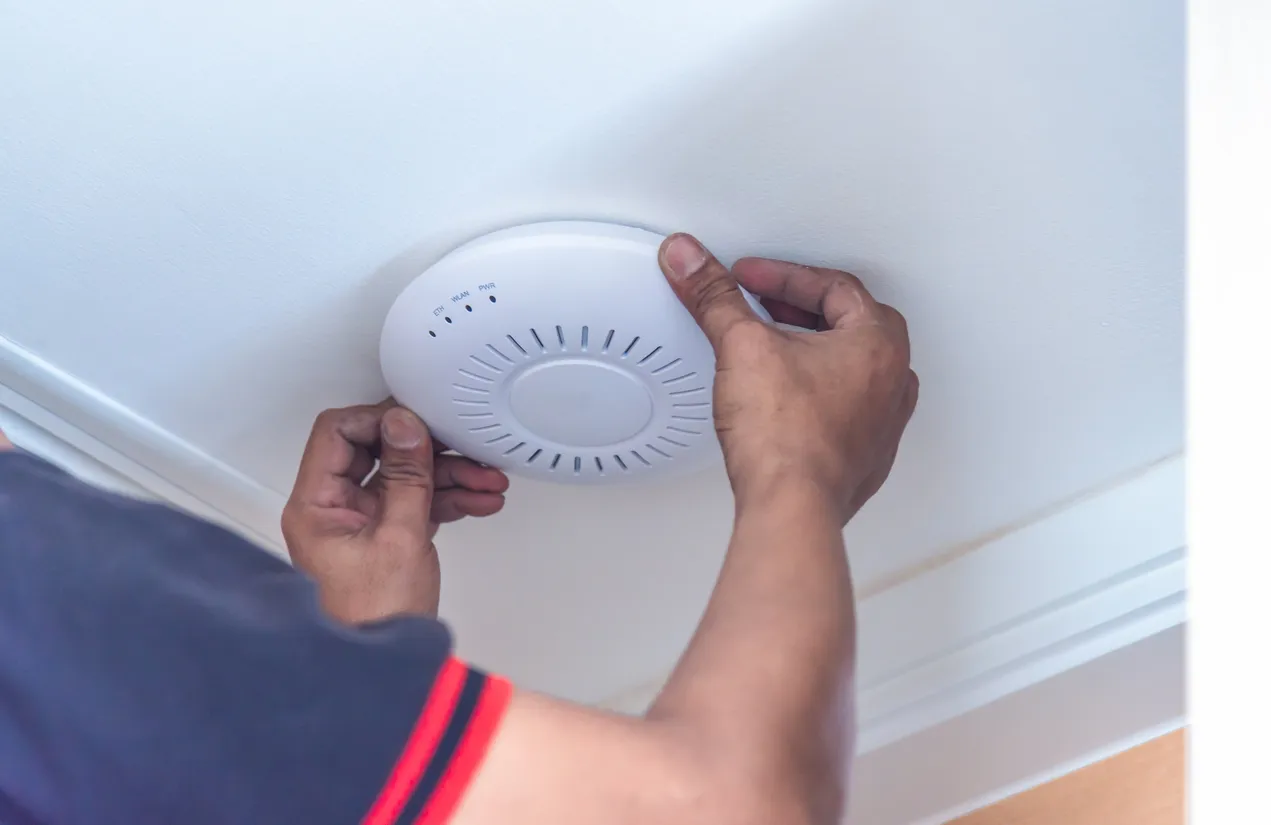
Key facts
- The reboot lives under Devices, then the device Settings panel, then the Manage dropdown in the UniFi Network application.
- A controller-initiated reboot keeps all configuration; it is not a factory reset and does not remove the AP from the controller.
- A UniFi AP typically takes 45 to 90 seconds to reboot and re-adopt to the controller.
- The same restart is available from the UniFi Network mobile app (iOS and Android) by selecting the device and tapping Restart.
- If the controller cannot reach the AP, you can reboot it over SSH with the command
reboot, or by power-cycling the PoE.
How do you reboot a UniFi access point from the controller?
From the UniFi Network application, the reboot is four clicks: Devices, the access point, Settings, then Restart under the Manage dropdown. Log in to your controller (a Cloud Key, UniFi OS console, or hosted controller), open the Devices section, and click the access point you want to restart. The device panel opens on the right. Click the Settings gear, scroll to the Manage section, and click Restart, then confirm.
The access point will go offline, its LED will cycle through its startup colours, and it will come back online and re-adopt on its own. You do not need to touch anything else. Connected clients on that AP will drop briefly and reconnect, either to the same AP once it is back or to a neighbouring one in the meantime.
Will a reboot lose the access point's configuration?
No. A reboot restarts the device without touching its settings, and it stays adopted to your controller throughout. This is the important distinction to keep clear: Restart simply power-cycles the device, while the other option in that same Manage dropdown, Remove (sometimes labelled "forget"), is the one that wipes the AP back to factory defaults and unadopts it. We have seen people reach for the wrong one under pressure, so it is worth saying plainly. If you only want the AP to come back to life, you want Restart, not Remove.
How do you reboot a UniFi AP if the controller can't reach it?
If the access point shows as disconnected and the GUI restart does nothing, SSH straight into the AP and run reboot. Connect to the access point's IP address over SSH using the device's management credentials (the same username and password set under your controller's device authentication settings, not the controller login), and issue reboot at the prompt. The SSH session will drop as the device restarts, and the AP returns after a minute or so.
If SSH also fails, the last resort is physical: pull the Ethernet cable at the PoE switch port or PoE injector for ten seconds, then plug it back in. Because most UniFi APs are powered over Ethernet, removing the cable cuts power and forces a hard reboot. (On a managed PoE switch you can also toggle the port's PoE off and on from the controller, which saves a trip up the ladder.)
Why won't a UniFi access point come back after a restart?
The most common reason an AP stays disconnected after a reboot is that the controller and the AP can no longer discover each other, usually a network or firmware issue rather than a hardware fault. A self-hosted controller needs ports 8080 and 8443 reachable from the AP's subnet, and a firmware mismatch after a controller upgrade can leave an older AP unable to re-adopt. In our experience supporting Sydney SMEs, the culprit is most often a VLAN or firewall change that quietly broke the inform path between the AP and the controller, not the access point itself.
Frequently asked questions
How long does a UniFi access point take to reboot?
Most UniFi access points take between 45 and 90 seconds to reboot and re-adopt to the controller. Larger or older models can take a little longer. If the AP has not returned after about three minutes, it is worth checking whether the controller can still reach it on the network.
Does rebooting a UniFi AP disconnect Wi-Fi users?
Yes, briefly. Clients connected to that specific access point lose their connection while it restarts and reconnect once it is back, or roam to a nearby AP in the meantime if you have overlapping coverage. For a single-AP site, expect a short Wi-Fi outage; for a multi-AP site, the impact is usually minimal.
What is the difference between Restart and Remove in the Manage dropdown?
Restart power-cycles the access point and keeps all settings and its adoption to the controller. Remove (or "forget") unadopts the device and resets it to factory defaults. Use Restart for troubleshooting a misbehaving AP, and only use Remove when you genuinely want to wipe the device for re-adoption elsewhere.
Can you reboot a UniFi access point remotely?
Yes. As long as you can reach the controller, you can reboot any adopted AP from anywhere using the UniFi Network web interface or the mobile app. If the controller has remote access enabled through your Ubiquiti account, you do not need to be on the local network to do it. For businesses needing secure remote access to their network, this is one of the benefits of a properly managed UniFi setup.
If your business runs UniFi and you would rather not be the one climbing into the ceiling every time an access point plays up, that is the sort of thing we manage day to day for Sydney SMEs at 4iT as part of our managed Wi-Fi and network infrastructure service. Happy to take a look at your Wi-Fi setup if it would help.