
Key facts
- Structured cabling is a planned cabling system for a whole site, not ad hoc runs added one at a time as needs come up.
- It carries data and voice to desks, Wi-Fi access points, cameras, and other devices over a consistent, documented system.
- Cat6 and Cat6A are the common standards for new business installs, with Cat6A supporting higher speeds and longer runs for demanding sites.
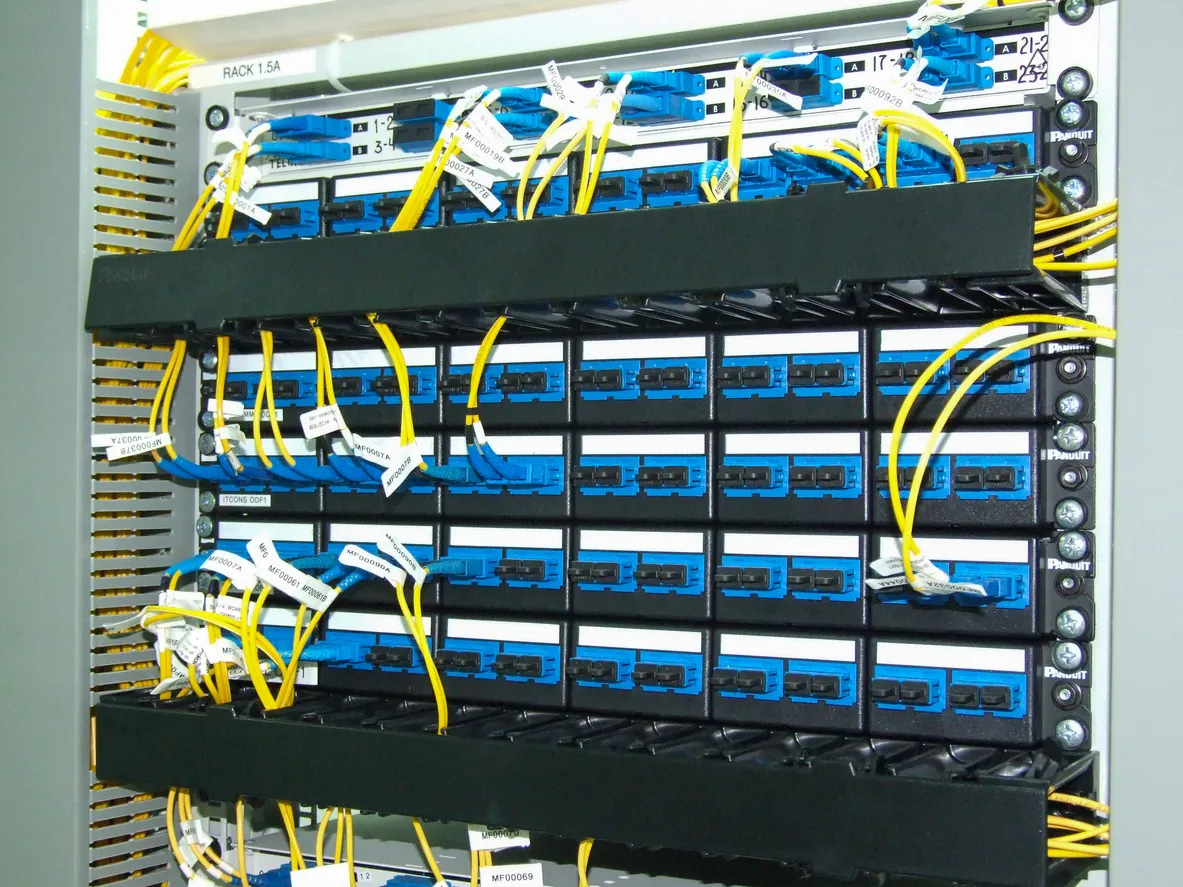
- Good cabling is labelled, tested, and certified on completion, so faults are quick to trace and changes are quick to make.
- Poor or undocumented cabling is one of the most common causes of slow, unreliable office networks and is expensive to diagnose.
- Cabling underpins everything else on the network, so it is worth getting right before layering Wi-Fi, phones, and security on top.
What is structured cabling and how is it different from just running cables?
Structured cabling is a designed system where every cable run follows a standard, terminates in a central point, and is documented so the whole thing can be understood and maintained. The alternative, which we see constantly, is cabling that grew organically: a run added here for a new desk, another there for a printer, nothing labelled, and no record of what goes where. That works until it does not, and then a simple fault becomes hours of tracing cables by hand. Structured cabling costs a little more to do properly up front and saves far more over the life of the office in faster fixes, easier changes, and a network that actually performs.
Do we need structured cabling if we have Wi-Fi?
Yes, because Wi-Fi depends on cabling rather than replacing it. Every wireless access point has to be wired back to the network, and the quality of that cabling sets the ceiling on what the Wi-Fi can deliver. Wi-Fi is the right choice for laptops, phones, and movement around the office, while a cabled connection is still better for anything that stays put and needs reliability, such as desktops, point-of-sale terminals, and the access points themselves. The two work together, and a strong wired backbone is what makes good business Wi-Fi possible in the first place.
What cabling standard should a Sydney business use?
For most new business installations, Cat6 is the sensible baseline and Cat6A is the choice where you want headroom for higher speeds, longer runs, or a fit-out you intend to keep for many years. The right answer depends on the building, the distances involved, and what you expect to run over it, which is why we assess the site rather than quoting a single product blind. Spending a little more on the cabling standard at install time is almost always cheaper than recabling later, because the labour and disruption of pulling new cable through a working office is the expensive part, not the cable itself.
What does a structured cabling project involve?
A cabling project runs from design through to a tested, certified, documented result. We start by walking the site and planning the runs, the central rack or comms point, and where access points and devices need to land. We then install and terminate the cabling neatly, label both ends of every run, and test and certify each link so you have proof it meets standard. The documentation we hand over is part of the value: it is what makes future moves, adds, and changes quick, and it feeds straight into managing the rest of your network infrastructure.